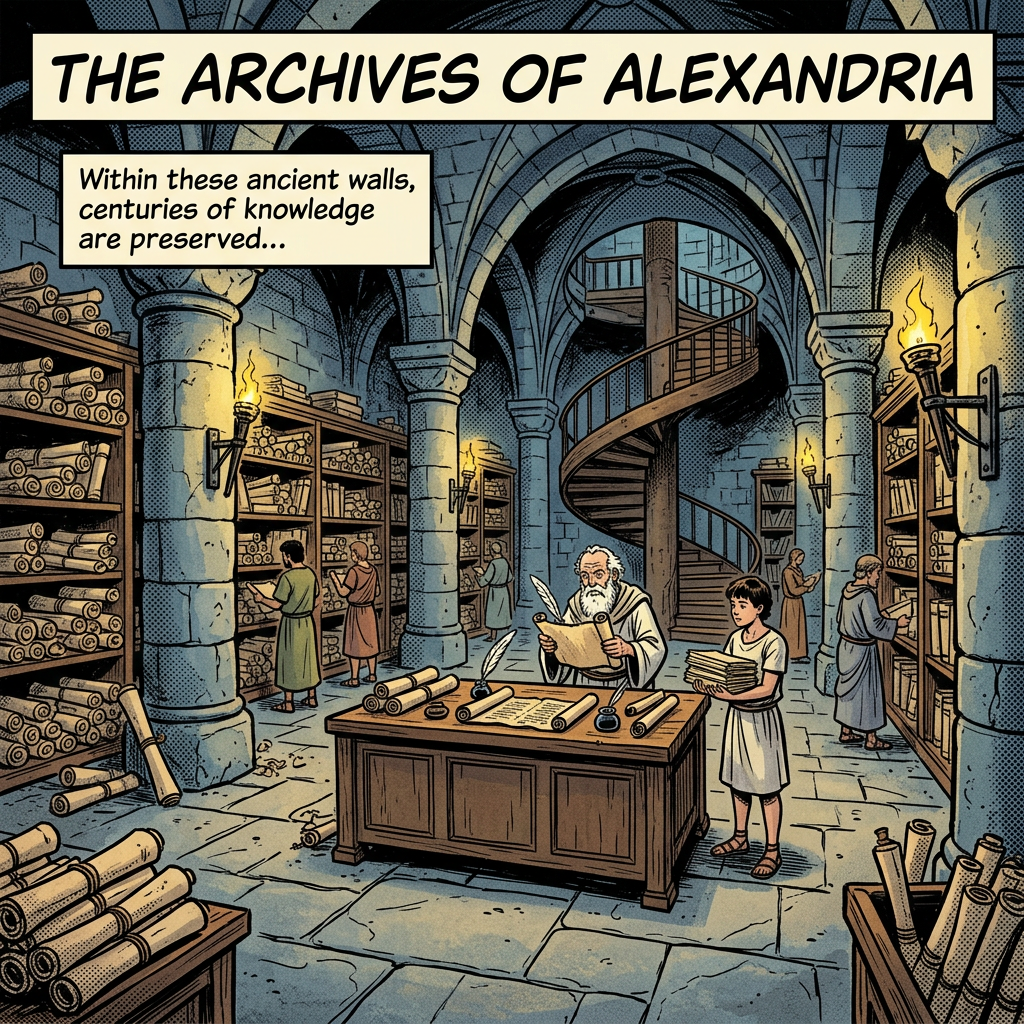
The New Testament’s use of Second Temple literature tells us less about the canon of Scripture and more about the historical world into which Jesus came. These books provide the cultural backdrop of the first century, while the inspired apostles, under the guidance of the Holy Spirit, selected from that world what was true and useful for proclaiming Christ.
Most Christians are surprised the first time they discover that the New Testament occasionally refers to books that are not found in many modern Protestant Bibles. A natural question follows: Did the apostles consider these books Scripture? Should Christians read them? Why did inspired writers use them if they are not part of the biblical canon?
Rather than beginning with conclusions, let’s begin where every investigation should begin—with the evidence.
What Are the Deuterocanonical Books?
The word deuterocanonical means “belonging to the second canon.” These books appear in the Septuagint (the ancient Greek translation of the Old Testament) and remain part of the Roman Catholic and Eastern Orthodox canons. Most Protestant Bibles place them in an appendix, call them the Apocrypha, or omit them entirely.
Among these writings are Tobit, Judith, Wisdom of Solomon, Sirach (Ecclesiasticus), Baruch, 1 Maccabees, and 2 Maccabees.
Another group of ancient Jewish writings, such as 1 Enoch, Jubilees, and The Testament of the Twelve Patriarchs, are not part of the Roman Catholic deuterocanon but were nevertheless widely read in portions of Second Temple Judaism.
This distinction is important because discussions often blend these collections when they should be considered separately.
Did the New Testament Quote These Books?
The answer depends on what we mean by quote.
The New Testament frequently introduces passages from the Old Testament with expressions such as:
“It is written…”
or
“The Scripture says…”
Those formulas unmistakably identify the Hebrew Scriptures as authoritative.
When we examine the deuterocanonical books, however, we discover something different.
Paul appears to echo the Wisdom of Solomon in portions of Romans. James contains striking parallels with Sirach. Yet none of these passages are introduced as Scripture.
These are better described as literary allusions, echoes, or parallels rather than formal scriptural quotations.
This distinction is significant. Familiarity with a work does not automatically grant it canonical authority.
The Exception: Jude and 1 Enoch
One passage stands apart from the others.
Jude writes:
“It was also about these men that Enoch, in the seventh generation from Adam, prophesied, saying, ‘Behold, the Lord came with many thousands of His holy ones, to execute judgment upon all…’” (Jude 14–15, NASB95)
These words closely parallel 1 Enoch 1:9.
Unlike Paul’s echoes of Wisdom or James’s parallels with Sirach, Jude reproduces the substance of Enoch’s prophecy almost verbatim.
Peter likewise reflects traditions found in 1 Enoch when discussing the rebellious angels and their imprisonment (2 Peter 2:4).
This raises an obvious question.
If Jude quotes 1 Enoch, does that make 1 Enoch Scripture?
The evidence does not require that conclusion.
Quoting a Source Does Not Canonize the Source
Scripture contains many examples of biblical writers referring to sources that are not themselves part of Scripture.
Luke tells us he consulted earlier written accounts while composing his Gospel (Luke 1:1–4).
Paul quotes Greek poets in Athens:
“For we also are His offspring.” (Acts 17:28)
He also cites Greek literature in Titus 1:12.
The Old Testament mentions several historical works now lost, including The Book of the Wars of the LORD (Numbers 21:14), The Book of Jashar (Joshua 10:13; 2 Samuel 1:18), and the Chronicles of the Kings of Israel.
No one argues that these books automatically became Scripture simply because biblical authors referenced them.
Instead, the inspired writer selected truthful material that served his purpose.
Inspiration belongs to the biblical author—not necessarily to every source the author consulted.
Why Would the Apostles Use These Books?
The apostles lived in the world of Second Temple Judaism.
Many faithful Jews read works such as Sirach, Wisdom, and 1 Enoch. These writings shaped conversations, illustrated theological ideas, and preserved traditions familiar to their audiences.
When Jude cites Enoch, he is speaking into a culture that already knew the passage.
This is much like a modern preacher quoting C. S. Lewis or Charles Spurgeon. Quoting them does not elevate their books to Scripture. It simply employs a familiar source to communicate truth.
The apostles were able to use literature known by their readers without declaring every part of that literature inspired.
What Does This Teach Us?
Perhaps the greatest lesson is not about the canon but about careful reading.
The apostles distinguished between the Scriptures and other respected writings.
They were willing to use history, poetry, tradition, and contemporary literature whenever those sources accurately illustrated the truth they wished to communicate.
Recognizing this helps us avoid two opposite errors.
The first error is assuming that every ancient Jewish book quoted or alluded to by the New Testament must therefore be inspired Scripture.
The second error is dismissing those books as worthless simply because they are not canonical.
Both extremes overlook the evidence.
The Investigation Continues
The presence of deuterocanonical and other Jewish literature within the intellectual world of the apostles reminds us that God often works through history, language, and culture without conflating them with divine revelation.
The New Testament consistently identifies the Hebrew Scriptures as the authoritative written Word of God while also demonstrating familiarity with other respected Jewish writings.
That observation does not settle every debate concerning the canon, but it does remind us to distinguish carefully between quotation, allusion, illustration, and inspiration.
An investigation follows the evidence.
The evidence suggests that the apostles knew these writings, occasionally used them, but reserved explicit scriptural authority for the sacred writings they consistently called “the Scriptures.”
Small Group Reflection
Read Jude 14–15 alongside 1 Enoch 1:9. Then read Acts 17:28 and Titus 1:12.
Ask the group: What is the difference between quoting a source because it contains a true statement and recognizing that source as inspired Scripture?
Learning to make that distinction helps us read the New Testament with greater precision and appreciate the historical world in which the apostles proclaimed Christ.