Did Modern Christianity Misread Luther?
Martin Luther is often quoted in modern discussions about baptism, salvation, grace, and faith. In many church environments, Luther’s name is invoked to support the idea that baptism itself guarantees salvation in such a complete sense that little else remains necessary afterward, other than believing that the sacrament “worked.”
But Luther’s actual theology was far more complex—and far more demanding—than many modern presentations suggest.
Luther absolutely emphasized God’s initiative in salvation. He fiercely opposed the medieval idea that human beings could earn justification through religious merit, indulgences, ritual performance, or moral achievement. Salvation, for Luther, originated in God’s grace alone through Jesus Christ.
This emphasis shaped his understanding of baptism.
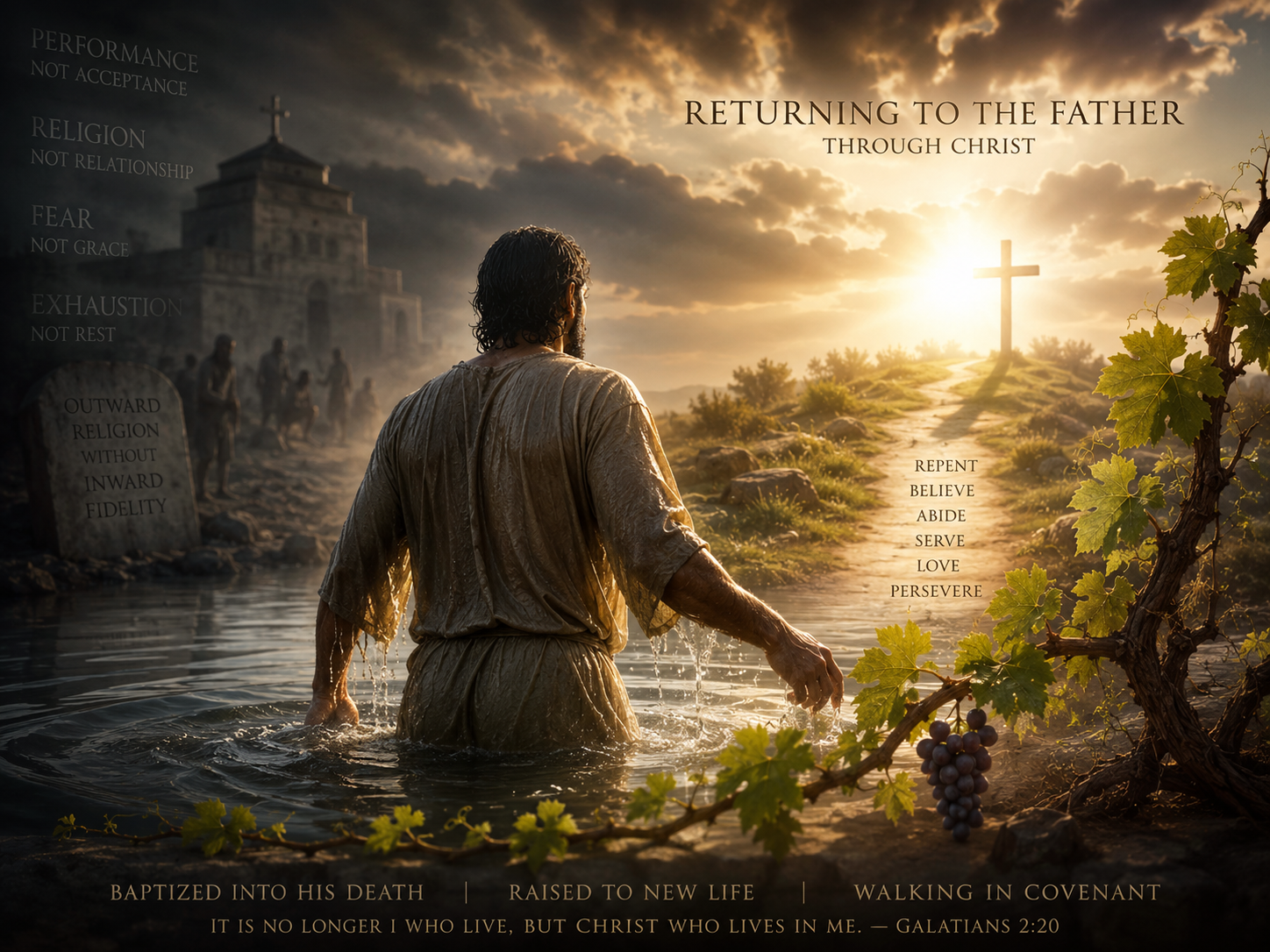
Luther believed baptism was not merely symbolic. He viewed it as a profound covenant act in which God attached His promise to the believer. Baptism signified participation in Christ’s death and resurrection, especially as rooted in Romans 6. Yet Luther did not treat baptism as a detached religious transaction that guaranteed spiritual security regardless of how a person lived afterward.
This distinction matters because modern discussions sometimes reduce Luther’s theology to something like this: “God saved you in baptism; your role afterward is minimal.” That is not how Luther spoke. In fact, Luther repeatedly described the Christian life as a continual return to baptism through repentance, faith, and dying to self. The opening statement of his Ninety-Five Theses famously declared: “When our Lord and Master Jesus Christ said, ‘Repent,’ he intended that the entire life of believers should be repentance.”
That statement alone should force modern readers to slow down. If Luther believed baptism itself secured salvation apart from ongoing covenant faithfulness, why did he place such enormous emphasis on daily repentance? The answer is found in how Luther understood participation in Christ.
For Luther, baptism was not merely a past event. It marked entry into an ongoing life of dying and rising with Christ. Romans 6:4 (CSB) says: “Therefore we were buried with him by baptism into death, in order that, just as Christ was raised from the dead by the glory of the Father, so we too may walk in newness of life.”
Notice the movement:
- buried,
- raised,
- walk.
The Christian life was never meant to stop at the ritual itself. Baptism pointed toward continual participation in Christ’s death to sin and new life before God.
This is where modern misunderstandings often emerge. Some presentations of baptism unintentionally reduce salvation to a completed institutional event disconnected from ongoing covenant life with God. Under such thinking, spiritual participation gradually becomes secondary because assurance rests almost entirely upon the ritual itself. Yet Scripture repeatedly warns against outward participation without inward fidelity.
Israel possessed covenant signs and still drifted into unbelief. The wilderness generation experienced deliverance even as they hardened their hearts. The prophets repeatedly confronted people who maintained religious activity while their covenant relationship with God weakened beneath the surface. Even the churches in Revelation outwardly existed while inwardly drifting.
This tension appears throughout Scripture: Outward participation alone never guaranteed covenant faithfulness.
Luther himself recognized this danger more than many realize.
He continually connected baptism to:
- daily repentance,
- prayer,
- faith,
- vocation,
- obedience,
- mortification of the flesh, and continual dependence upon Christ.
For Luther, the believer did not move beyond baptism. Rather, the believer continually returned to its meaning through ongoing repentance and faith.
This is why Luther’s theology cannot honestly be reduced to passive religious security.
At the same time, Luther retained sacramental assumptions inherited from his historical context, particularly concerning infant baptism. He believed God’s grace operated through baptism even before intellectual comprehension fully developed. Yet even here, Luther did not envision baptized individuals remaining spiritually passive throughout life. Faith, repentance, instruction, and participation remained necessary realities within Christian living.
This is important because modern church culture sometimes creates a dangerous separation between participation in a sacrament and active covenant life with God.
The New Testament consistently refuses to separate these realities. Jesus continually called people not merely into outward religious identity, but into an abiding relationship with the Father through Himself. Paul repeatedly described believers as participating in Christ, walking in the Spirit, dying to self, and persevering in faith.
Hebrews repeatedly warns believers not to harden their hearts. The gospel, therefore, is not merely about experiencing a ritual event. It is about restored covenant life with God through Jesus Christ.
This does not diminish baptism. Rather, it restores baptism to its proper covenant context.
Baptism points toward union with Christ, participation in His death and resurrection, entrance into the household of God, and continual life under the Father through the Son by the Holy Spirit.
The danger arises whenever outward participation becomes detached from inward fidelity.
This was the recurring danger in Israel. It became a recurring danger within church history.
And it remains a danger today.
The Christian life was never intended to function through passive religious security alone. The call of Christ remains relational: “Remain in me, and I in you” (John 15:4, CSB).
The restoration revealed through Christ continually calls believers beyond ritual confidence alone and back into covenant life with the Father. That was true in Scripture.
And, properly understood, it was far closer to Luther’s own theology than many modern assumptions may realize.